Misogyny is everyone's problem
And the nasty women who perpetuate it should be most ashamed of all.

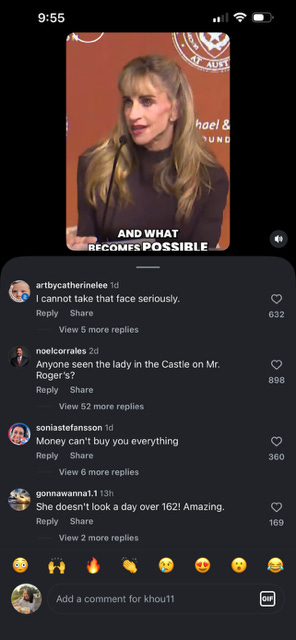
Late last week, Michael and Susan Dell announced a $750M donation to The University of Texas at Austin medical school in her father’s name. CBS featured it on Instagram and there was a vile hellscape of comments about her looks (mostly from men).
The week prior, The New York Times featured a segment with Lena Dunham who is promoting a new book. And, whew, geez – the nightmare of vitriol leveled at her, mostly by women, was something.
Do you see what happened there? Men are empowered to hate middle-aged women. Women aren't shamed for despising young women. And the result is a society who believes it’s okay to criticize women for breathing.
Folks, it’s time to admit we have a misogyny problem. A real one. And it’s not just a male issue - it’s a cultural one - because, let’s face it, women can be the worst.
Clearly, the Internet – and the rise of keyboard warriors – is partly to blame. 99% of the people who write this crap would never have the guts to say it to someone’s face. But what’s wild is how few women are aware they can be a misogynist. Someone commented to me on the Dunham post that it was “impossible she was” because she was female.
That ignorance is a problem women must address. Misogyny isn’t about who you are - it’s about the standards you enforce. Let’s unpack it, because this doesn’t come out of nowhere. It starts at birth. A patriarchal society has girls conditioned to prioritize appearance, likability, and compliance. We watch what happens to those of us who step out of line - how quickly we’re judged, mocked, or diminished. Just like the wee girl on the playground who punched the boy hard and proudly but was punished for standing up for herself. Meanwhile, he got a pass despite striking first.
In our book, 𝘞𝘢𝘭𝘬𝘪𝘯𝘨 𝘰𝘯 𝘉𝘳𝘰𝘬𝘦𝘯 𝘎𝘭𝘢𝘴𝘴, Shannon Nutter and I unpack several ways for women to do better.
*𝗜𝗳 𝘆𝗼𝘂 𝗱𝗼𝗻’𝘁 𝗹𝗶𝗸𝗲 𝗮 𝘄𝗼𝗺𝗮𝗻, 𝗸𝗲𝗲𝗽 𝗶𝘁 𝗺𝗼𝘃𝗶𝗻𝗴. Not every opinion needs to be voiced, especially if it adds to the noise.
*𝗙𝘂𝗻𝗱 𝘄𝗼𝗺𝗲𝗻. As investors, operators, and consumers — capital is power. Direct it intentionally.
*𝗛𝗶𝗿𝗲 𝗮𝗻𝗱 𝗽𝗿𝗼𝗺𝗼𝘁𝗲 𝘄𝗶𝘁𝗵 𝗶𝗻𝘁𝗲𝗻𝘁𝗶𝗼𝗻. Don’t default to the same profile. Expand the aperture.
*𝗚𝗶𝘃𝗲 𝗰𝗿𝗲𝗱𝗶𝘁, 𝗹𝗼𝘂𝗱𝗹𝘆 𝗮𝗻𝗱 𝗽𝘂𝗯𝗹𝗶𝗰𝗹𝘆. Don’t let contributions get absorbed or reassigned.
*𝗜𝗻𝘁𝗲𝗿𝗿𝘂𝗽𝘁 𝗯𝗶𝗮𝘀 𝗶𝗻 𝗿𝗲𝗮𝗹 𝘁𝗶𝗺𝗲. In meetings, in feedback, in performance reviews - say something.
*𝗦𝘁𝗼𝗽 𝗽𝗼𝗹𝗶𝗰𝗶𝗻𝗴 𝘁𝗼𝗻𝗲. Focus on substance. Women shouldn’t have to package truth to make it palatable.
*𝗕𝘂𝗶𝗹𝗱 𝗰𝗼𝗮𝗹𝗶𝘁𝗶𝗼𝗻𝘀, 𝗻𝗼𝘁 𝗰𝗼𝗺𝗽𝗲𝘁𝗶𝘁𝗶𝗼𝗻. Collaboration scales impact; isolation protects the status quo.
Being female is draining enough - and managing the invisibility of being a middle-aged one is even more absurd. But once we are done pretending it's something to endure and instead something to fight, the more likely we are to disrupt a system that counts on our silence
.
It’s interesting when I was writing my book that a common piece of feedback I’d get from other women was that ‘women are just as bad if not worse than men’. Queen Bee syndrome was often cited.
Of course, this is absolutely a phenomenon but what’s often missed is that internalised misogyny is to blame for a lot of these women to women behaviours.